
For many people, switching from a gas-powered car to an electric vehicle feels like a much bigger change than simply buying another car.
Where will I charge it?
How long does charging take?
What happens on a road trip?
Will the battery last?
What if I live in an apartment?
What happens if something breaks?
These are reasonable questions…
But there is something we have noticed again and again:
The idea of switching to an EV is often more complicated than actually living with one. Once you understand a few basic differences, EV ownership can become surprisingly simple.
1. You Already Manage Your Car’s Energy
With a gas car, you probably don’t spend much time thinking about the gasoline infrastructure around you. You drive. Your fuel level gets low. You stop at a gas station for a few minutes. Then you continue.
An EV changes that routine, but it doesn’t necessarily make it more difficult. In many cases, it makes it easier. Instead of going somewhere specifically to refuel, your car can charge while you’re doing something else.
-While you’re sleeping.
-While you’re working.
-While you’re shopping.
-While you’re eating dinner.
– While you’re staying at a hotel.
The important difference is that charging doesn’t always need to be a separate activity. Your car spends most of its life parked anyway. An EV gives you the opportunity to use some of that parked time to put energy back into the vehicle. After a while, that changes the way you think about “fueling” a car altogether.
2. Electricity Changes the Energy Equation
There is another difference between gasoline and electricity that goes beyond convenience. With a gasoline vehicle, you are almost completely dependent on the fuel market. You cannot produce gasoline in your garage. You cannot install something on your roof that puts gasoline into your car every morning. And gasoline prices can change because of oil markets, geopolitical events, supply disruptions, refinery issues and many other factors completely outside your control.
Electricity is different.
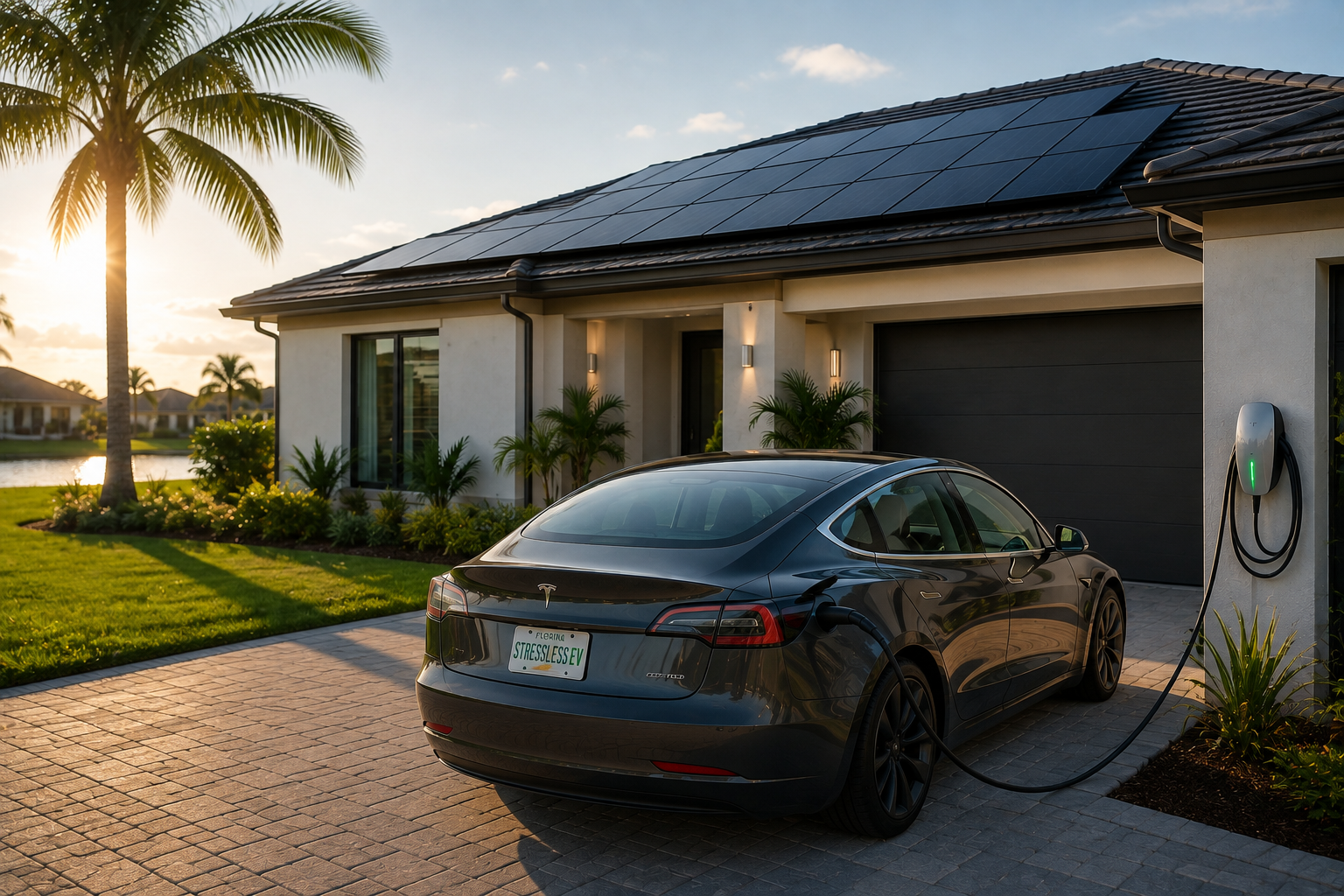
Electricity prices can change too, of course. But electricity can come from many different sources — and in some cases, one of those sources can be your own home. With rooftop solar, part of the energy used by your EV can potentially be generated where you live. Think about how unusual that is. For more than a century, we have generally thought about transportation energy as something we have to go somewhere and buy.
-A gas station.
-A fuel pump.
-A price displayed on a large sign beside the road.
An EV changes that relationship.
Energy can be available wherever the vehicle spends its time.
-At home.
-At work.
-At a shopping center.
-At a hotel.
-At a public charging station.
-And potentially from sunlight falling on your own roof.
Your home can become part of your transportation infrastructure. That is a much bigger change than simply replacing a gas pump with a charging cable.
3. The Biggest Question: Where Will You Charge?
Before buying an EV, this is one of the first things we recommend figuring out.
Not:
“Where are all the chargers?”
But:
“Where will I normally charge?”
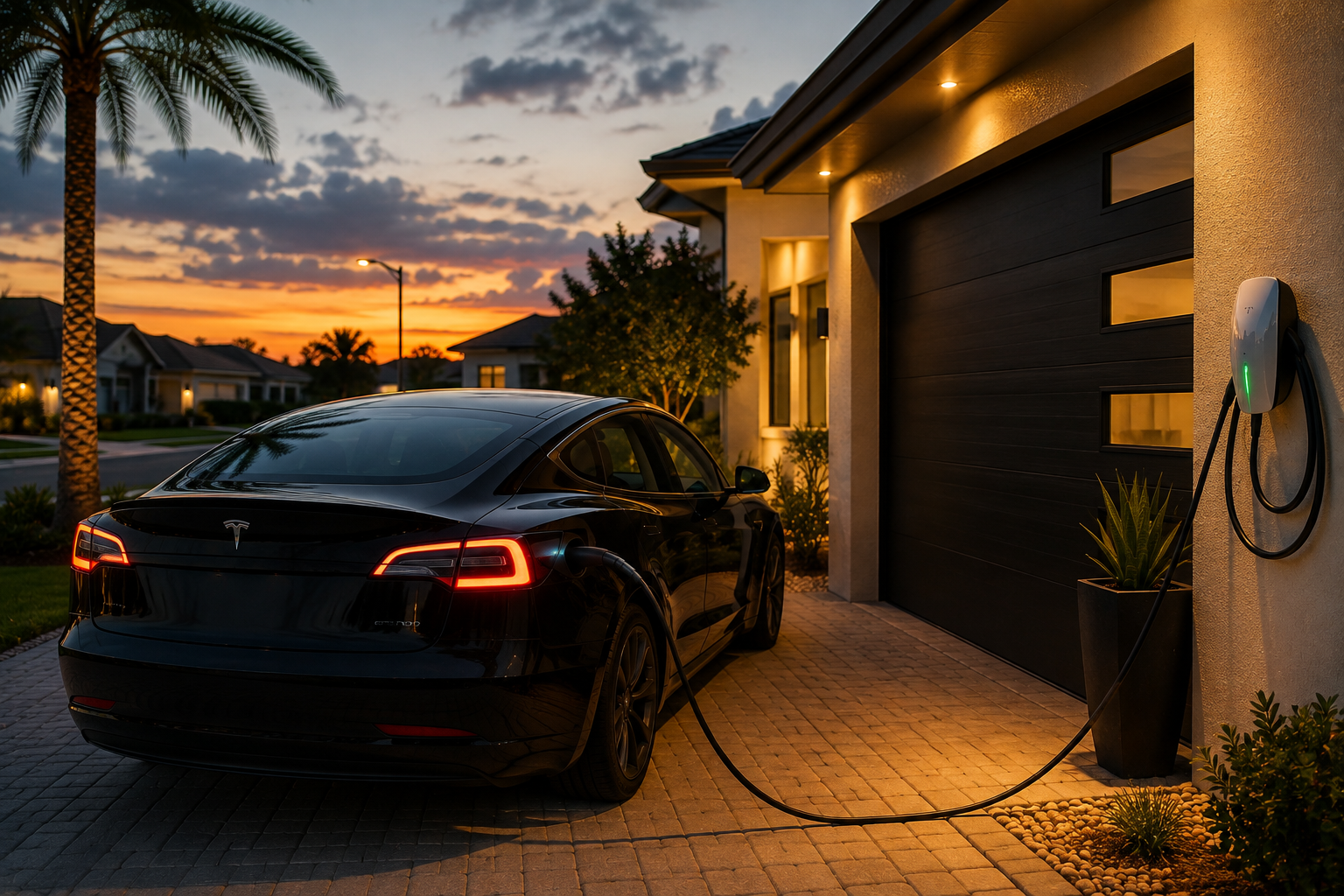
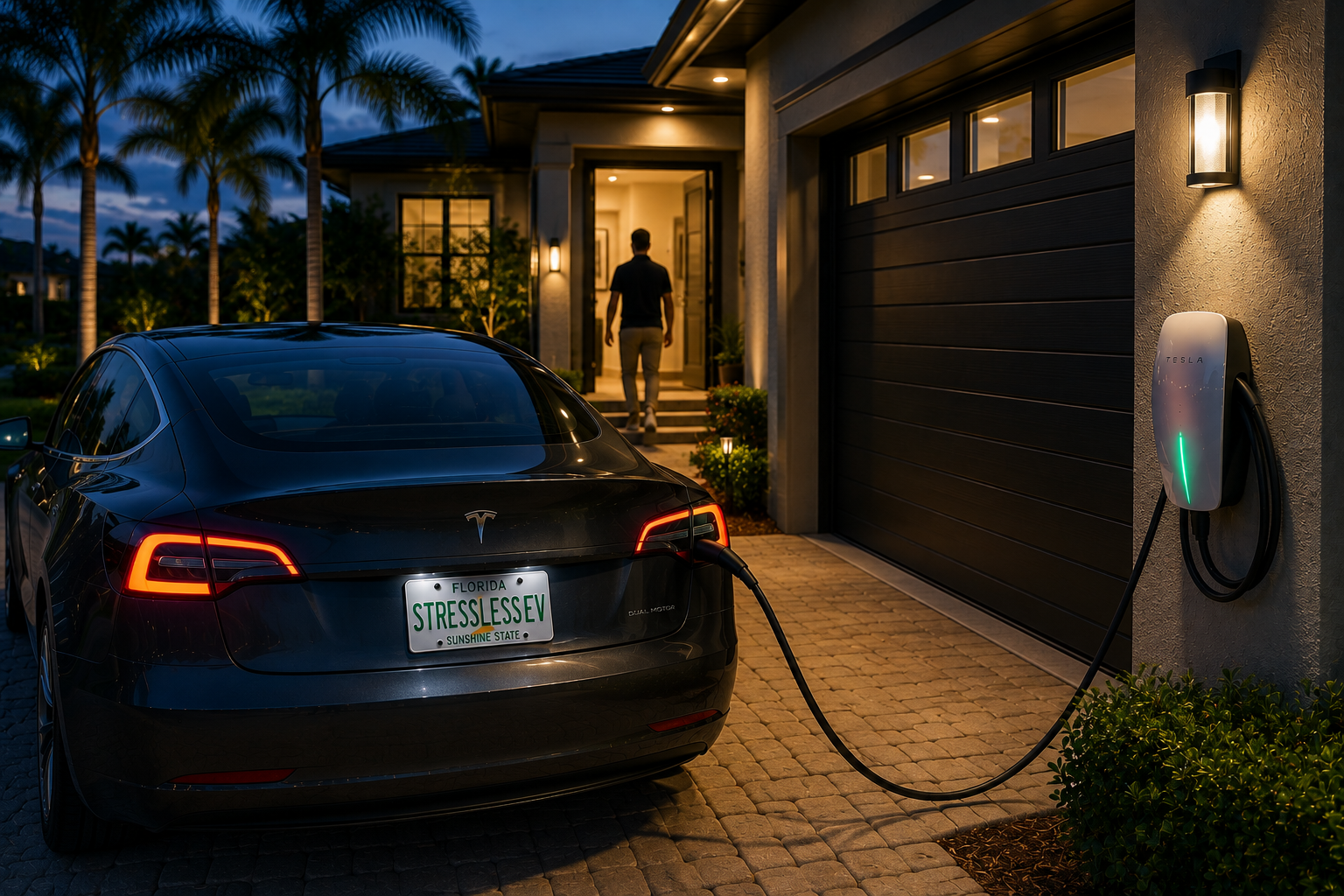
If you have a house with access to electricity near your parking space, the answer may be extremely simple:
At home.
You arrive in the evening, plug in, and the car charges while you sleep. The next morning, you leave with the energy you need. For many EV owners, this means they can actually spend less time thinking about fueling their car than they did with a gas vehicle. And you don’t necessarily need the fastest possible home charger. Your daily mileage, electrical service, vehicle and the amount of time the car normally sits at home determine what charging setup makes sense. If your car sits in the driveway for ten hours every night, it doesn’t necessarily need to receive all of its energy in twenty minutes. The important question is whether it can comfortably recover the energy you normally use before you need the car again.
4. No Home Charger? That Doesn’t Automatically Mean No EV
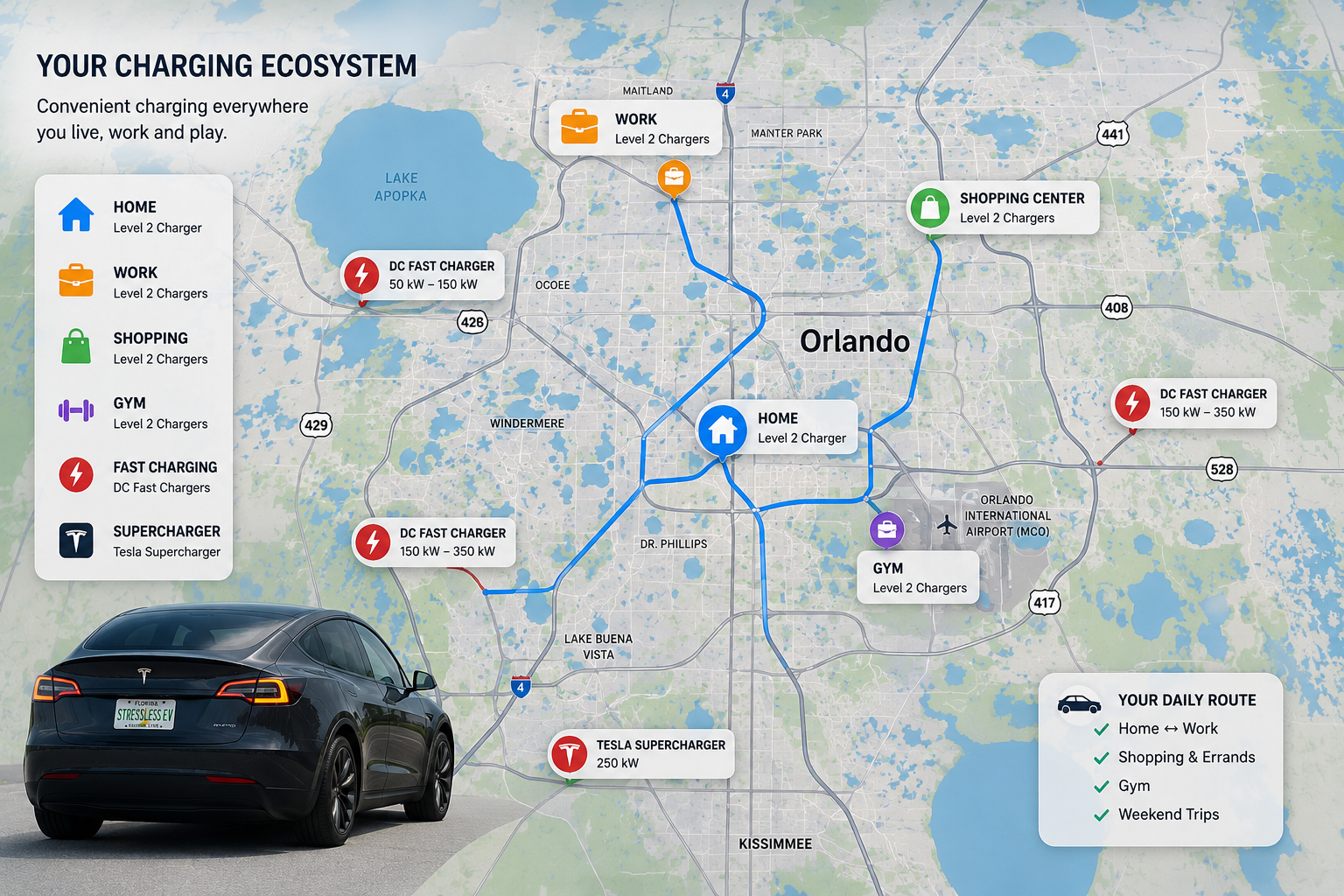
This is where the situation becomes more individual. If you live in an apartment or condominium, park on the street, or simply can’t install a home charger, that doesn’t automatically mean an EV won’t work for you. Instead, we look at your charging environment.
-Where do you work?
-Are there chargers near your office?
-Where do you shop?
-Are there chargers near your gym, grocery store or other places you regularly visit?
-Are there reliable fast chargers along your normal routes?
-How many miles do you actually drive every day?
A person driving 20 miles per day has very different charging requirements from someone commuting 140 miles per day. Someone who works eight hours next to an available charger may have a completely different experience from someone who drives continuously throughout the day. That’s why we don’t believe there is one universal answer to the question:
“Is an EV right for me?” – It depends on your life.
5. Charging Can Become Part of Your Lifestyle
One of the interesting things about EV ownership is that you gradually begin noticing electricity everywhere.
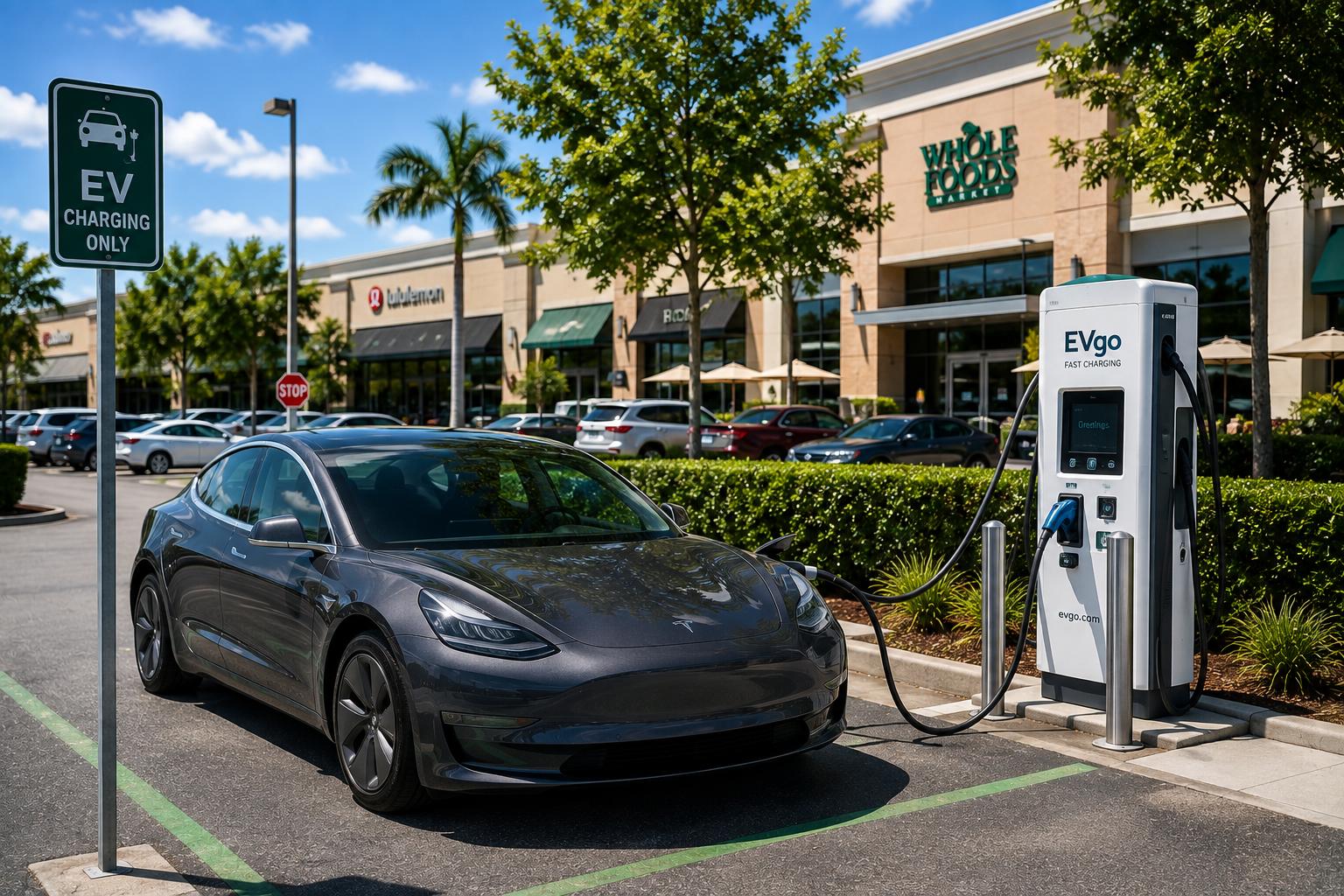
-A charger at a shopping center.
-Another one near a restaurant.
-One at a hotel.
-One near your office.
-One in a parking garage you have driven past dozens of times.
There are different charging networks, different speeds, different prices and sometimes even chargers that can be used at little or no cost depending on the location and circumstances. You begin to understand which ones are convenient for your routine. It can almost feel like discovering another layer of infrastructure that was always around you — you simply had no reason to notice it before. And once you find the locations that fit your lifestyle, you may use the same few chargers again and again.
Or simply charge at home.
6. You Don’t Need to Charge to 100% Every Day
This is another concept that can initially feel strange to someone coming from a gas car. With gasoline, we’re accustomed to filling the tank. With an EV, you generally don’t need to think that way. For everyday driving, you can maintain enough charge for your normal routine while following the charging recommendations appropriate for your particular vehicle and battery.
Think about your phone. You don’t wait until it reaches 0% before you’re allowed to plug it in. And you don’t necessarily need it at 100% every time you leave the house.
Your car can become similar. Plug it in when appropriate. Let it charge while you’re doing something else. Drive when you need it. After a while, the process becomes remarkably uninteresting. And that’s a good thing.
7. What About Long Trips?
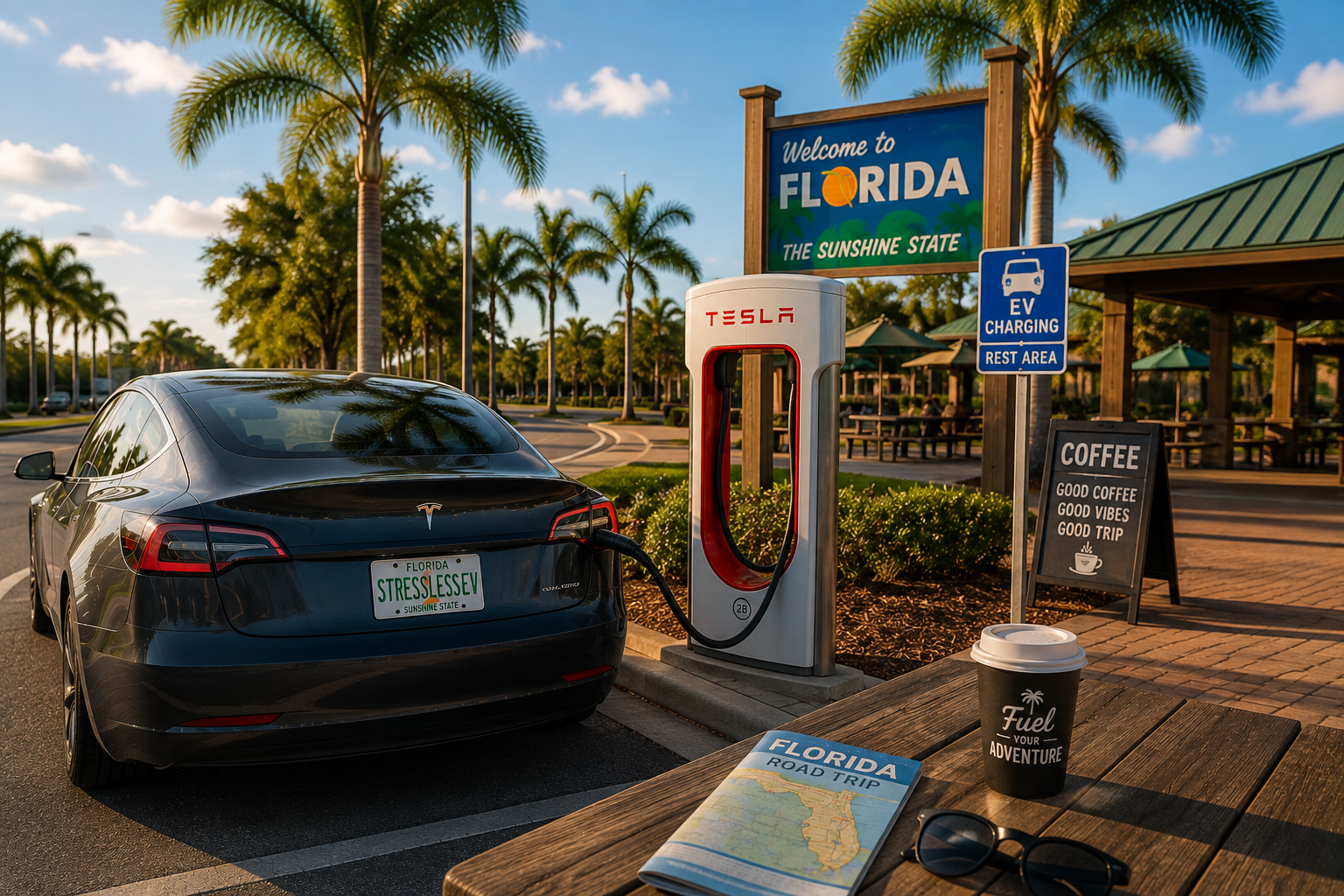
This is probably one of the biggest concerns for first-time EV buyers. Daily driving and road trips are two different situations. During normal daily use, you may rarely need public fast charging at all.
On a long trip, however, the car’s navigation system and charging infrastructure become much more important.
Instead of driving until the tank is nearly empty and then looking for a gas station, an EV trip can be planned around charging stops.
You drive.
You stop.
You plug in.
You use the restroom, get coffee or food, check your phone, stretch your legs — and continue.
Yes, charging normally takes longer than filling a gasoline tank.
That’s one of the genuine differences between EV and gasoline ownership, and pretending otherwise doesn’t help anyone. But whether that difference actually matters to you depends heavily on how often you make long trips and how you travel.
For someone driving hundreds of highway miles every day, charging speed and infrastructure can be extremely important.
For someone whose car spends every night in the garage and rarely travels more than 100 miles in a day, it may barely matter.

8. Range Is Important — But Context Is More Important
It’s easy to compare EVs using one number:
Range.
300 miles must be better than 250 miles, right?
Not necessarily.
Suppose you normally drive 40 miles per day and charge at home every night. Do you actually need 350 miles of range?
Maybe not.
On the other hand, if you drive 130 miles every day, frequently travel between cities, tow, or don’t have reliable home charging, range becomes much more important.
And the advertised range isn’t the only thing that matters.
-Climate matters.
-Driving speed matters.
-Wheels and tires matter.
-Driving habits matter.
-Vehicle age matters.
-Battery condition matters.
-And your charging environment matters.
That’s why we prefer to look at your transportation pattern, rather than simply recommending the EV with the biggest battery. The right EV isn’t necessarily the one with the highest number on the specification sheet. It’s the one that fits your life.
9. EV Maintenance Is Different, Not Nonexistent
You may have heard that EVs require “no maintenance.” That’s not quite true. An EV eliminates many traditional components associated with an internal-combustion powertrain.
-There are no routine engine oil changes.
-No spark plugs.
-No traditional engine-related maintenance.
But an EV is still a car.
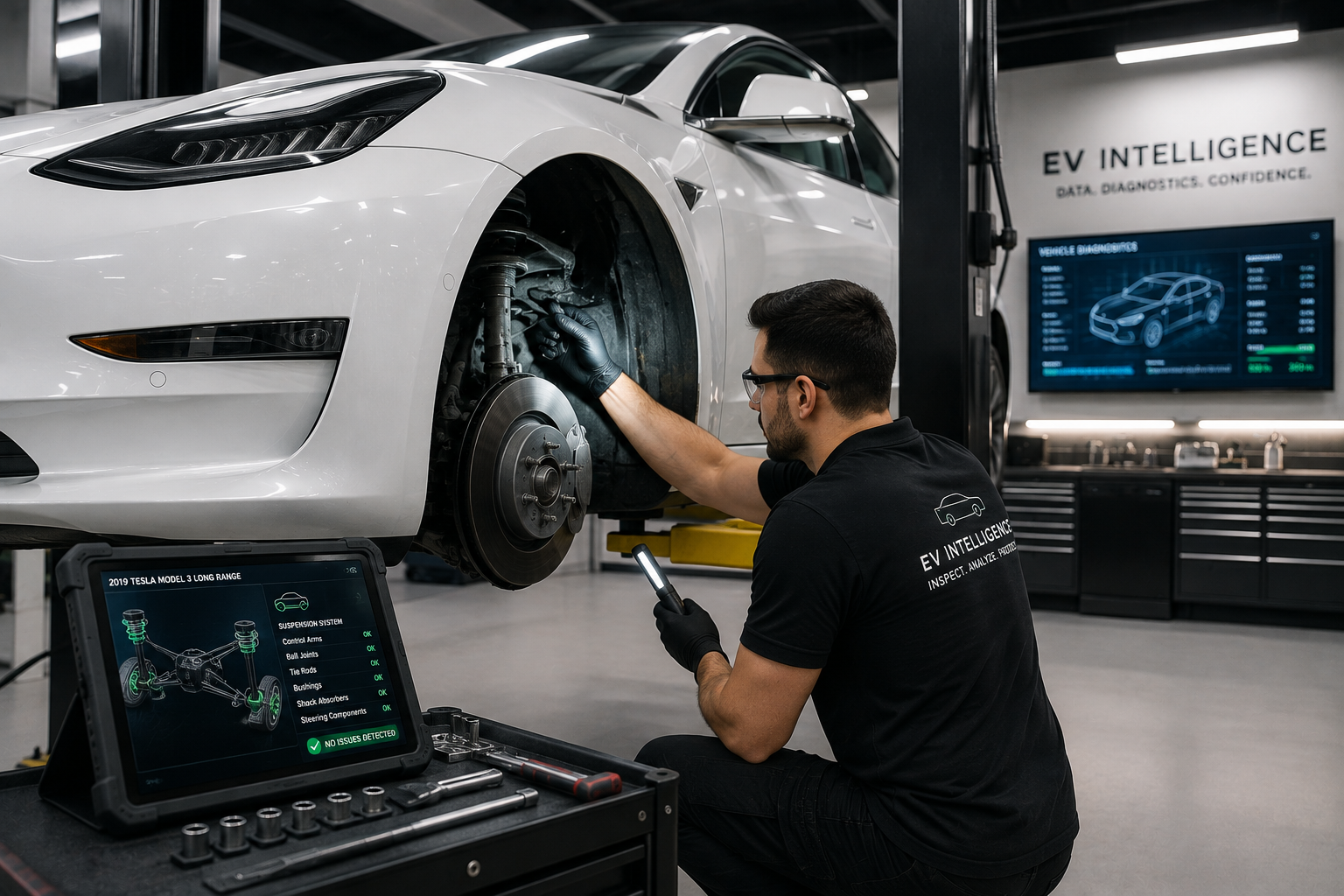
-It still has tires.
-Suspension.
-Brakes.
-Air conditioning.
-Cabin filters.
-Cooling systems.
-Electronics.
-Low-voltage systems.
-Cameras and sensors.
-Door mechanisms.
And depending on the vehicle, increasingly sophisticated software and thermal-management systems. The maintenance profile changes. It doesn’t disappear. This distinction becomes especially important when you’re buying a used EV.
10. A Used EV Needs to Be Evaluated Differently
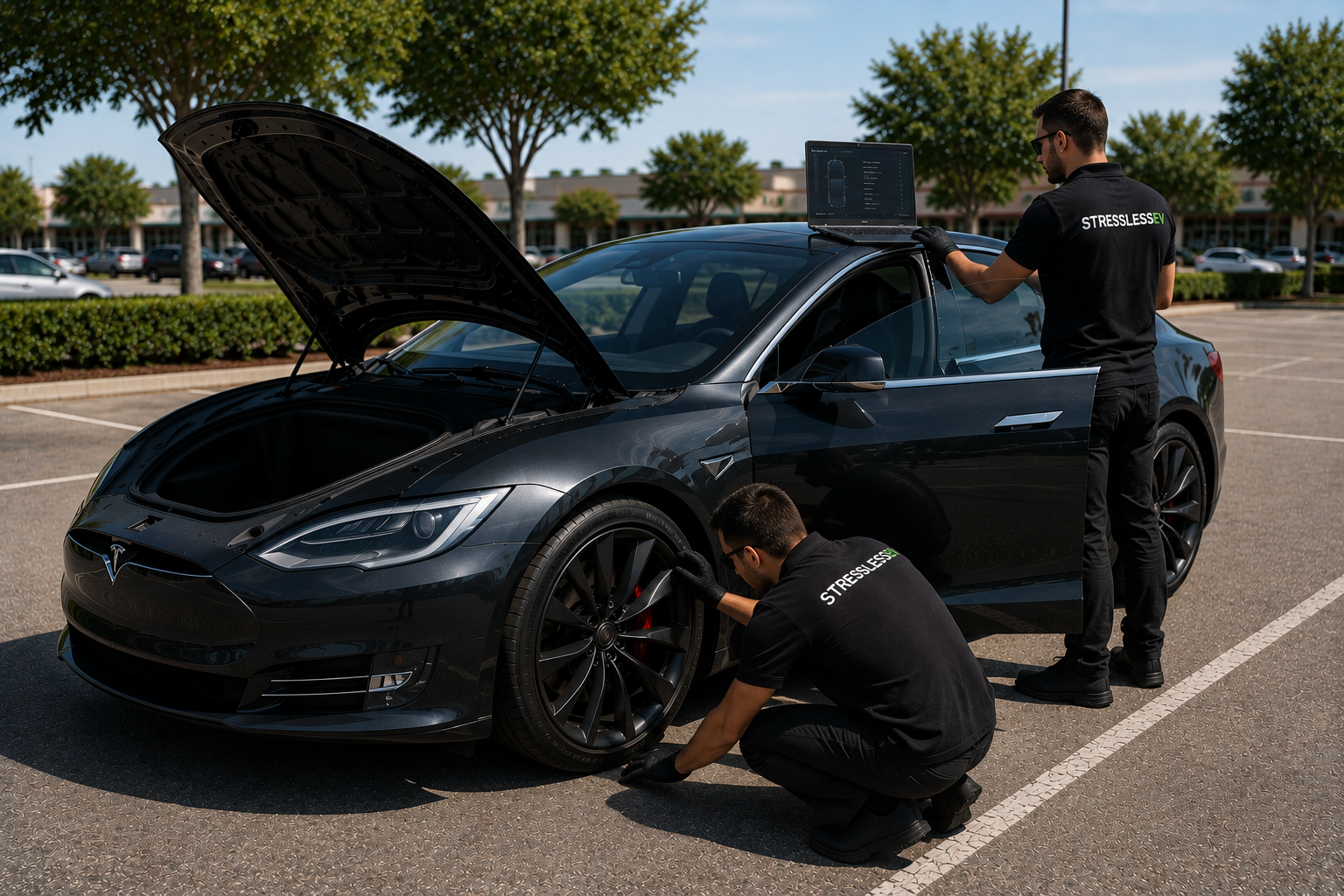
Mileage alone doesn’t tell the whole story. Two vehicles showing 100,000 miles can have very different histories — and potentially very different futures. With an EV, and especially with a used Tesla, we want to understand more than whether the paint looks good and whether the car drives normally around the block. Depending on the model, year and individual vehicle, we may want to understand things such as:
-battery condition;
-charging behavior;
-drive units;
-suspension;
-electronics;
-cameras and sensors;
-climate systems;
-software and hardware configuration;
-previous accidents;
-previous repair quality;
-and the specific known concerns associated with that model and production period.
A high-mileage EV that has been properly maintained and carefully used may sometimes be a much more interesting vehicle than a lower-mileage example with a questionable history. The odometer is one piece of information. It isn’t the whole story. That’s why applying exactly the same buying process you used for a gasoline car doesn’t always make sense.
It’s different technology, so it deserves a different evaluation.
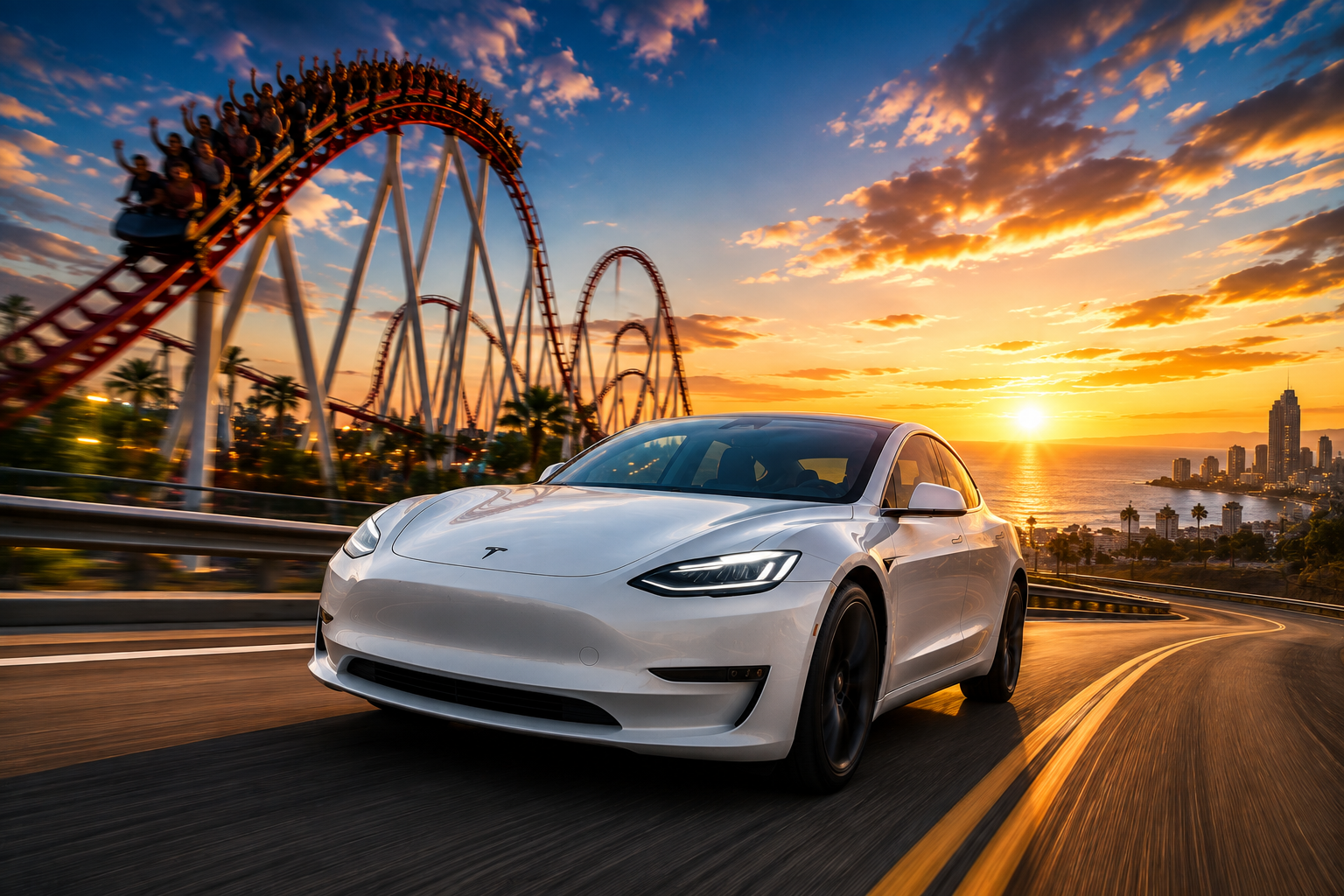
11. The Driving Experience May Be the Biggest Surprise
Charging gets most of the attention before someone buys an EV. After they buy one, they often start talking about completely different things.
-Instant acceleration.
-Smooth power delivery.
-Regenerative braking.
-Preconditioning the cabin before getting into the car.
-Controlling functions from your phone.
-Leaving home with a charged vehicle.
-Software updates.
-Quiet driving.
-One-pedal driving.
-And, in a Tesla, an unusually software-centered approach to the entire vehicle.
These things can sound like features on a specification sheet before you own the car. Then they become part of everyday life. At some point, many owners stop thinking:
“I’m driving an electric car.”
It’s simply their car.
12. You Don’t Need to Become an EV Expert
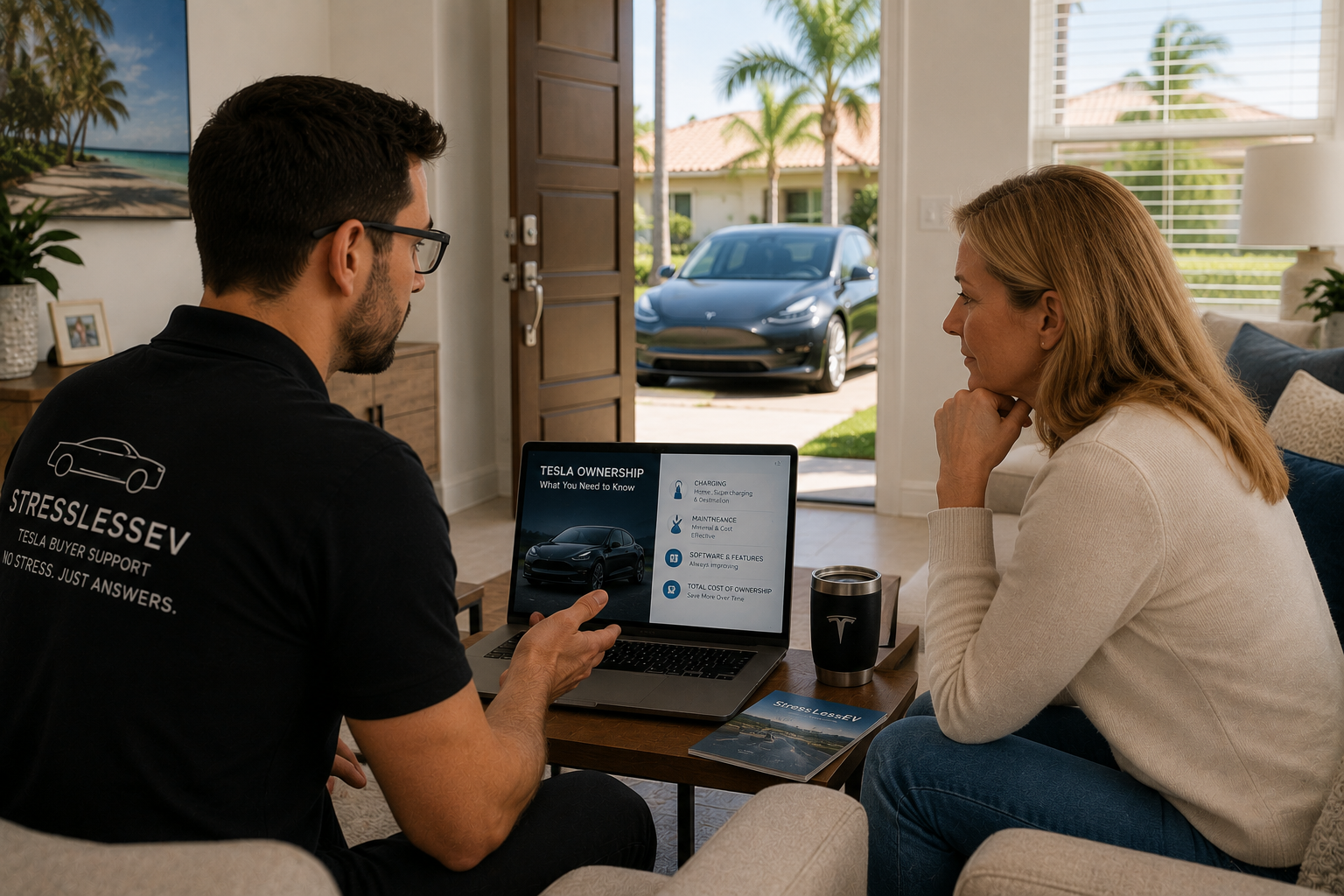
This may be the most important point. You don’t need to understand battery chemistry to own an EV. You don’t need to memorize every charging network. You don’t need to understand kilowatts, volts and amps before taking your first test drive. And you certainly don’t need to learn everything at once. You only need to understand the things that affect your situation:
-your daily mileage;
-your charging options;
-your travel habits;
-your budget;
-your home situation;
-and the vehicle you’re considering.
The rest can come naturally. That’s also why independent guidance can be useful when someone is entering the EV world for the first time. You don’t need to know everything. You need to know enough to make the right decision.

13. Start With Your Life, Not the Car
If you’re thinking about switching from gas to electric, don’t begin by asking:
“Which Tesla should I buy?”
Start with:
“How do I actually use my car?”
-How far do you drive?
-Where does your car spend the night?
-Where do you work?
-Can you charge there?
-How often do you travel?
-How much space do you need?
-What do you actually expect from the vehicle?
-Once we understand that, everything else becomes easier.
We can map your charging environment, understand your daily and occasional driving needs, determine what range actually makes sense, compare models and configurations, and then search for the right vehicle.
That’s the philosophy behind StressLessEV. We don’t believe everyone needs an EV. And we don’t believe every EV is right for everyone. But if an EV fits your lifestyle, the transition from gasoline may be much easier than you imagine. Different technology. Different habits. Less complicated than it looks. And after living with it for a while, you may wonder why the switch ever seemed so difficult.

And Then There’s the Part That Really Feels Like the Future
Switching from gas to electric is only the beginning. The first thing you notice is that there is no engine running under the hood.
Then you get used to charging at home. You get used to controlling your car from your phone.
You get used to the cabin already being cool when you walk outside into the Florida heat.
You get used to software updates.
You get used to the idea that capabilities of the car can change without replacing the vehicle.
And then you experience technologies such as Tesla’s Full Self-Driving (Supervised).
For more than a century, the basic relationship between a person and a car remained essentially the same. You sit behind the wheel. You control the pedals. You steer. You make every driving decision yourself. Now that relationship is beginning to change.
A modern Tesla can use cameras, computing power and software to assist with increasingly complex driving tasks.
FSD (Supervised) still requires an attentive driver and does not make the vehicle fully autonomous. But the direction of the technology is difficult to ignore. And perhaps that is the most interesting part of switching to an EV.
You are not simply replacing gasoline with electricity.
You are moving from a traditional automobile toward something that increasingly feels like a computer, an energy system and a transportation platform combined into one.
Energy, Transportation and Software Are Coming Together
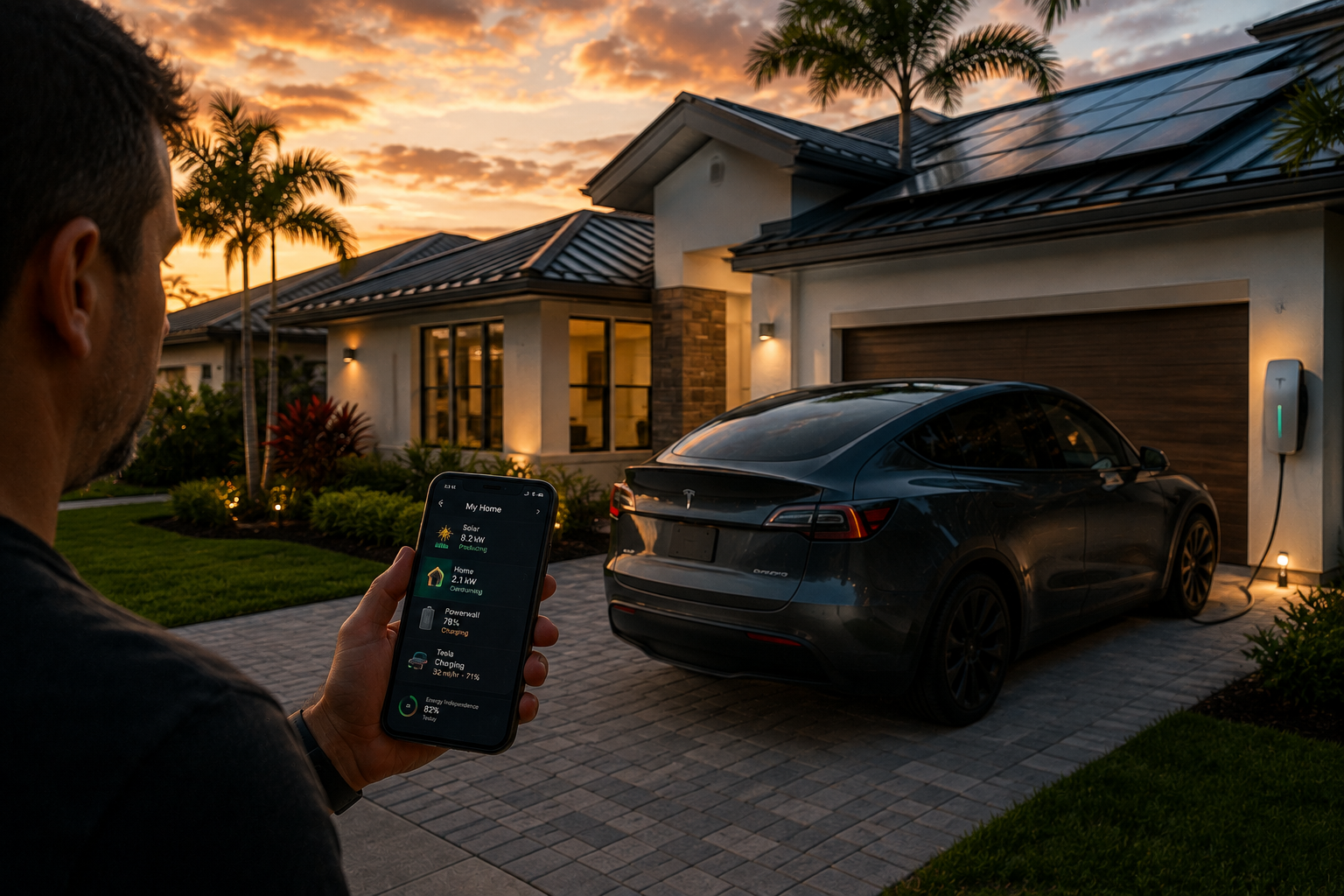
And the transformation goes beyond the car itself. Your home can produce electricity. Solar panels can turn sunlight into energy. That energy can charge the battery sitting in your driveway. Software can help determine when charging makes sense. Your phone communicates with your vehicle. The vehicle can receive new capabilities through software updates. Its cameras and computers can understand more about the environment around it. And technologies such as FSD (Supervised) are beginning to change the relationship between the driver and the machine itself. Energy, transportation and software are beginning to become one connected ecosystem. Think about what that means in everyday life. Your car can charge while you sleep. You can wake up with the energy you need for the day. You can cool the interior from your phone before walking outside. Your navigation can help incorporate charging into a trip. Your vehicle can receive new software overnight. Its cameras and sensors can monitor its surroundings. And some of the electricity moving it tomorrow may have been produced on your own roof today.
Features that would have sounded like science fiction not very long ago are already sitting in people’s driveways.
The Future Didn’t Arrive All at Once
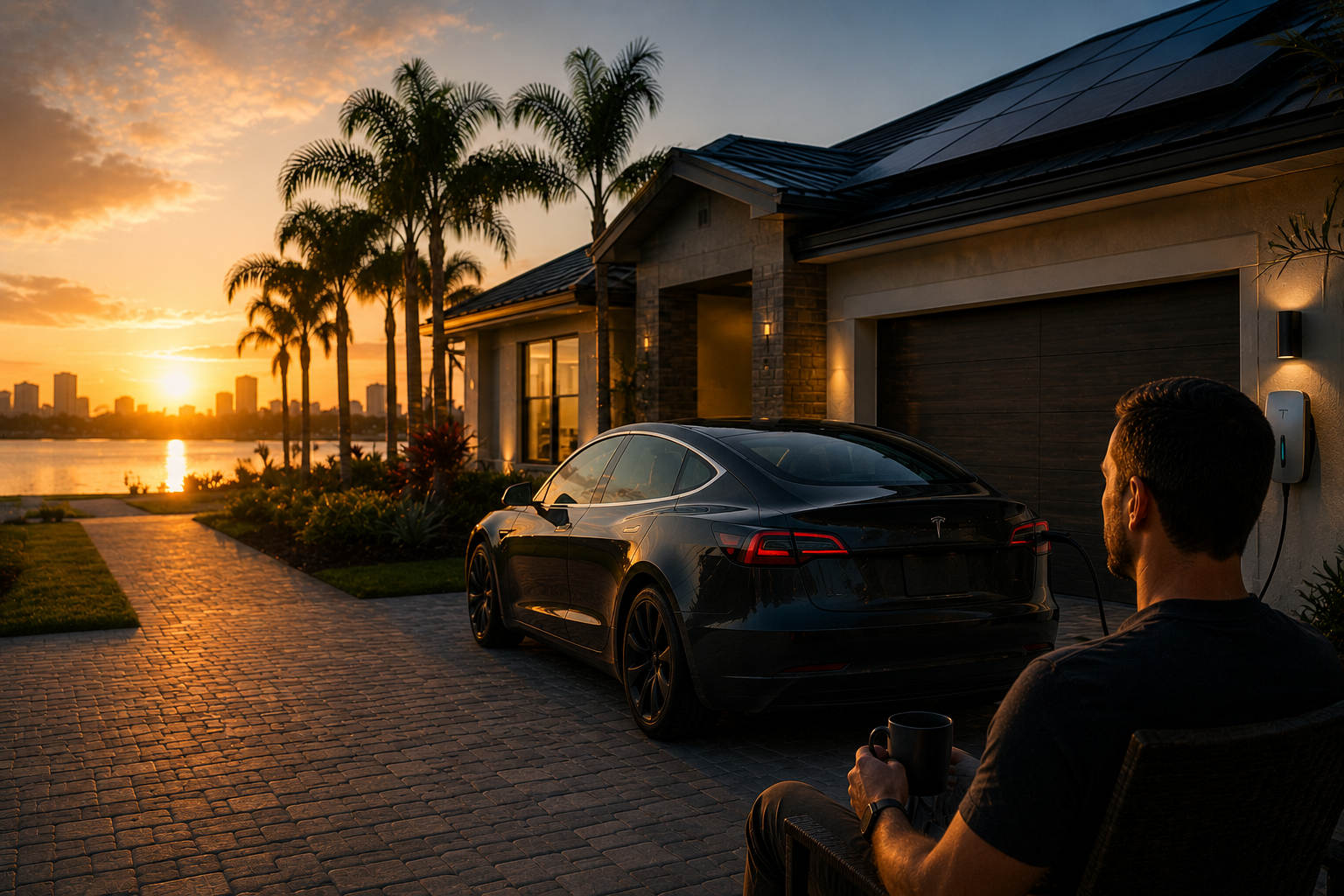
Maybe that’s why switching to an EV can seem intimidating from the outside. It looks like a completely different world. But once you start using the technology, most of it quickly becomes normal. You stop thinking about where the engine is. You stop looking for gas stations every time the fuel gauge gets low. You stop being surprised that your car has an app. You stop thinking it’s unusual to cool your car before you get into it. Eventually, even receiving a software update for your car feels completely ordinary. And that may be the most interesting thing about this transition.
The future didn’t suddenly arrive one morning. It arrived one technology at a time.
-Electric propulsion.
-Home charging.
-Solar energy.
-Connected vehicles.
-Smartphones.
-Cameras.
-Artificial intelligence.
-Driver-assistance systems.
-Software-defined cars.
Each change seemed unusual at first. Then it became normal. We spent decades talking about the car of the future. Somewhere along the way, the future quietly arrived.

Ready to See If an EV Fits Your Life?
At StressLessEV, our job isn’t simply to tell you to buy an electric vehicle. Our job is to help you understand whether one actually makes sense for you. We look at your lifestyle, driving habits, charging environment and priorities. We help you understand the technology, compare the right vehicles, evaluate used Teslas, inspect the vehicle before purchase and stay with you after it becomes part of your everyday life. Because switching to an EV shouldn’t begin with pressure. It should begin with understanding.
And the future of driving shouldn’t feel complicated.
It should feel exciting.
StressLessEV — Buy without fear. Own without stress.
Choose Where You Want Us to Join the Process
Already found a Tesla? Start with Basic. Want us involved from the beginning? Choose Premium.
You Find It.
We Check It.
- Step 5 — Initial Vehicle Screening
- Step 6 — VIN, Configuration & History Research
- Step 7 — Model-Specific Risk Analysis
- Step 8 — Speaking With the Seller
- Step 9 — On-Site Tesla Inspection
- Step 10 — Battery & Charging Evaluation
- Step 11 — Your Vehicle Report
We Help You Find It.
Then We Check It.
- Step 1 — Understanding Your Lifestyle
- Step 2 — Mapping Your Charging Environment
- Step 3 — Recommending the Right Tesla
- Step 4 — Searching Beyond the Obvious Listings
- Steps 5–11 — Complete Vehicle Evaluation
- Step 12 — Decision, Negotiation & Purchase Support
- Step 13 — We Stay With You After the Purchase
Compare Buying Guidance Packages
Choose the level of support that fits where you are in the buying process.